Outdoors for Everyone
Across Wisconsin, accessibility is an important consideration in outdoor recreation planning, infrastructure development and visitor experiences.
Recent investments in adaptive equipment, accessible facilities and inclusive programming are creating new opportunities across the state's parks, waterways, trails and outdoor destinations. While many projects are designed to address specific accessibility needs, they often make outdoor spaces easier to navigate and enjoy for a wide range of users, including older adults, families with young children and visitors with varying mobility levels.
As a result, accessibility is increasingly being incorporated into how outdoor recreation experiences are designed, delivered and enjoyed across Wisconsin.
From Trails to Playgrounds
Accessibility improvements can be found throughout Wisconsin's outdoor recreation landscape.
State parks and recreation areas feature universally accessible trails, cabins, fishing piers, beach access mats and adaptive recreation equipment. Several state properties have also added universally accessible playgrounds, including facilities at Belmont, Harrington Beach, High Cliff and Peninsula state parks, along with a universal splash pad at Blue Mound State Park.
These amenities complement a growing inventory of adaptive recreation equipment available through the Wisconsin Department of Natural Resources, including all-terrain wheelchairs, adaptive kayaks, beach wheelchairs and sit skis. Together, they help create outdoor experiences that can be enjoyed by a broader range of users and abilities.
Expanding Outdoor Experiences
Accessibility in Wisconsin's outdoor recreation system extends well beyond infrastructure and equipment.
The Sailing Education Association of Sheboygan uses modified sailboats and specialized controls to provide adaptive sailing experiences on Lake Michigan. Across the state, Cycling Without Age chapters are creating new opportunities for older adults and people with limited mobility to experience the outdoors. Using electric-assist trishaws, volunteer pilots provide rides through parks, trails and community spaces, bringing the experience of cycling to those who may no longer be able to pedal on their own.
Wisconsin organizations are also expanding access to paddling experiences. Along the Great Pinery Heritage Waterway, accessible launches help create easier access to rivers and waterways, while Apostle Islands Kayaking Express offers a boat-supported kayaking model that enables participants with a variety of physical abilities to experience the Apostle Islands National Lakeshore.
Accessibility also extends to the way outdoor experiences are delivered. In West Bend, Blue Lotus Center provides accessible trails, adaptive recreation equipment and all-abilities programming on its 64-acre property, creating opportunities for people with physical and cognitive disabilities, older adults, trauma survivors and others to connect with nature in a supportive environment.
Wisconsin's outdoor industry is also leading the way through innovation. Ashland-based Dillenschneider Designs developed the One-Arm Freedom canoe paddle, a specialized adaptive paddle that enables people with upper-limb impairments to paddle independently, demonstrating how thoughtful design can help more people participate in outdoor recreation.
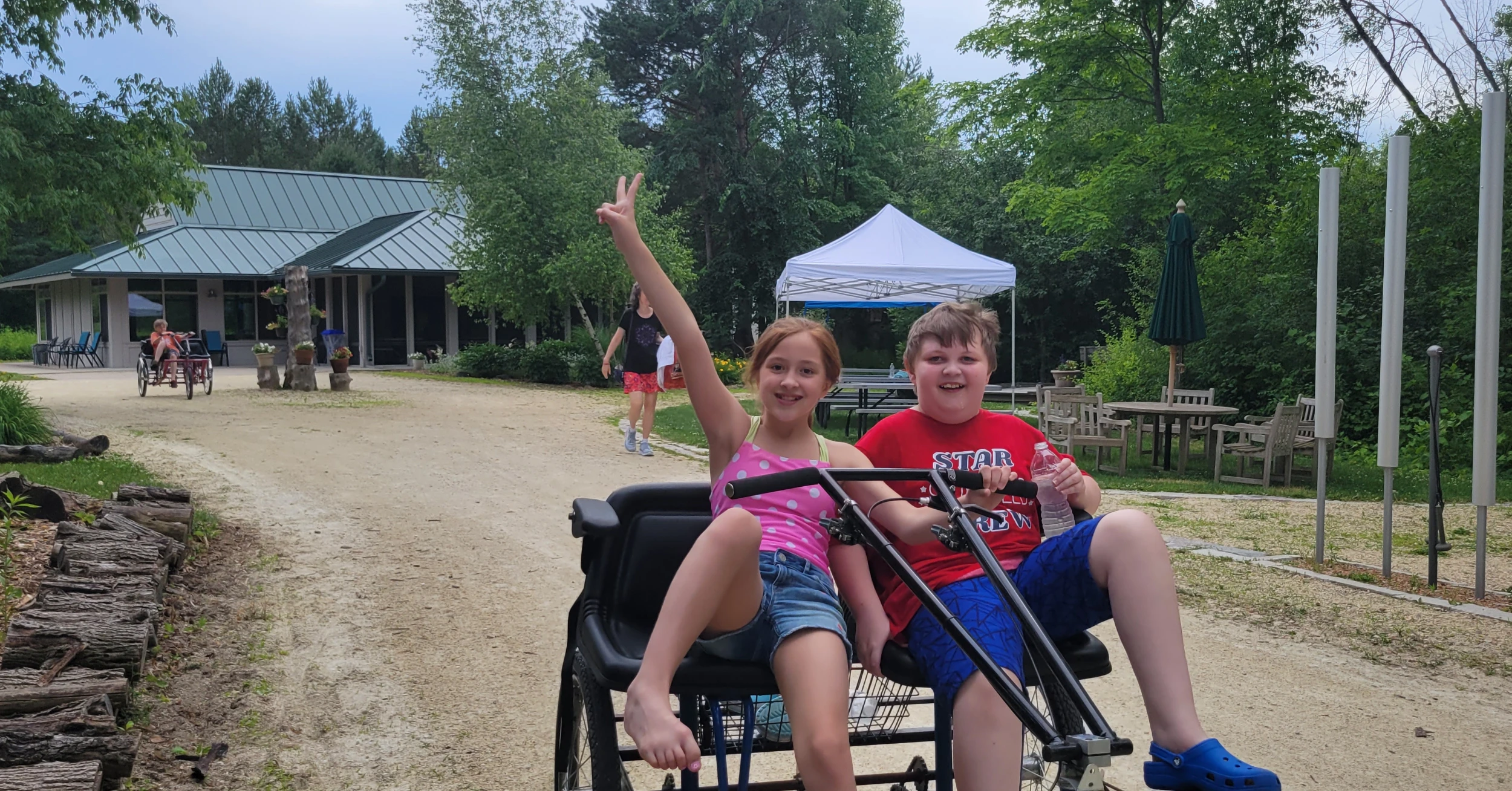
Children enjoying a bike ride at Blue Lotus Center in West Bend
Building for the Future
Accessibility continues to play a role in new recreation development projects across the state.
One example is the accessible pathway project at Meyers Beach within the Apostle Islands National Lakeshore. Scheduled to begin construction this year, the project will improve access to one of Wisconsin's most recognizable paddling destinations and serve as a key connection point for visitors exploring the Lake Superior shoreline.
Projects like this demonstrate a continued commitment to improving access to existing outdoor recreation destinations. By addressing physical or cognitive barriers and upgrading infrastructure, outdoor recreation leaders are helping ensure that some of Wisconsin's most iconic outdoor experiences can be enjoyed by everyone.
Continuing the Momentum
The examples highlighted here reflect just a few of the many ways accessibility is taking shape across Wisconsin's outdoor recreation landscape.
Whether through adaptive equipment, infrastructure improvements, recreation programming or new facility development, our industry continues contributing to a growing network of outdoor recreation opportunities.
Together, these efforts are helping shape a recreation system that continues to evolve alongside the needs of Wisconsin residents and visitors, creating more ways for people of all ages and abilities to experience Wisconsin's outdoors.
Tagged
Publish Date: 06/26/26
Share this page
Then Share Via